Revegetation, dune restoration and native planting in East Hampton begin with a deceptively simple idea: before deciding what to plant, understand what wants to grow there.
On the East End of Long Island, landscapes can change dramatically within a few miles—or even within a single property. An exposed ocean dune in Amagansett, a dry dune plain in Napeague, a protected bayfront edge, and an inland oak woodland may share sandy soils and salt air, but they are not the same habitat.
They should not be planted as if they were.
At Landelier, our approach to revegetation begins with observation. What is already growing nearby? How does water move through the property? Where does sand migrate? Which areas are exposed to salt and wind, and which are protected? What does the existing plant community tell us about the soil, moisture and microclimate?
The landscape usually gives us the first part of the planting plan.
Revegetation Is Not Simply Landscaping With Native Plants
A native garden and a revegetated landscape can look similar, but their intent is different.
In a designed native garden, plants may be selected and arranged primarily for composition, seasonal interest and habitat value. Revegetation starts somewhere else: with the ecological community that belongs to the site.
In the Town of East Hampton, this distinction is particularly important. Revegetation is intended to re-establish the native vegetation associated with a particular ecological community. Depending on the property, that may mean restoring layers of canopy, understory and groundcover—or, on a true dune, something much simpler.
The goal isn’t to put as many native species as possible onto a plant list. It is to put the right native plants in the right habitat.
Beach Grass Is Wonderful. It Doesn’t Belong Everywhere.
Few plants are as closely associated with the Hamptons coastline as American beachgrass (Ammophila breviligulata).
And for good reason.
Beachgrass is exceptionally adapted to exposed, shifting sand. Its spreading underground rhizomes help capture and stabilize blowing sand, making it an important plant in active dune systems. East Hampton’s own revegetation guidance notes that a dune restoration may sometimes require simply American beachgrass.
But that doesn’t mean every sandy coastal property should become a field of beachgrass.
Move away from an active dune and the plant community begins to change. Conditions may support bayberry, beach plum, bearberry, native grasses, goldenrods, asters, pitch pine, eastern red cedar or other species associated with more established coastal habitats.
Good dunescaping is therefore not about recreating the same recognizable “beach” palette everywhere. It is about understanding where on the coastal gradient a property actually sits.
A Few Miles Can Mean a Completely Different Landscape
One of our projects along Cranberry Hole Road in Amagansett is a good example.
The landscape there isn’t simply “coastal.” The Napeague area contains an unusual dune-plain environment, with established communities of low-growing vegetation adapted to dry, exposed and nutrient-poor conditions. Local descriptions of this habitat document carpets of bearberry and beach heather, fine grasses, scattered woody plants and pitch pine—a very different expression from a newly forming oceanfront dune dominated by beachgrass.
Our restoration planting responds accordingly.
Rather than defaulting to a conventional dune mix, the groundcover strategy is built predominantly around bearberry (Arctostaphylos uva-ursi), supplemented with native grasses. The planting remains low, restrained and visually quiet, but more importantly, it responds to the ecological character already present around it.
On another Amagansett property, where conditions are more characteristic of exposed dune habitat, American beachgrass may be exactly the right answer.
Same town. Similar sandy soil. Completely different planting response.
That difference is where thoughtful revegetation begins.
Designing With Succession, Not Against It
A coastal landscape is not static.
Wind moves sand. Salt exposure varies. Storms disturb vegetation. Grasses establish first in some locations; woody plants slowly colonize others. A protected depression may support a plant community entirely different from the exposed ridge only a short distance away.
Rather than forcing a finished composition onto this process, we prefer to work with it.
That can mean planting beachgrass where sand needs to be captured, using low native groundcovers where established dune vegetation already exists, introducing shrubs where the surrounding community supports them, or preserving volunteer native plants that are already doing exactly what a planting plan would ask them to do.
Sometimes the most important design decision is what not to plant.
Read the Landscape Before Drawing the Landscape
For us, revegetation is one of the clearest examples of landscape architecture as observation.
Before the first plant symbol appears on a plan, we look outward—to the vegetation beyond the property line, the edge of the road, the protected buffer, the neighboring dune, and the plants successfully regenerating on their own.
Those clues help determine not only the species, but also their density and distribution. Natural landscapes rarely occur as evenly spaced collections of individual plants. They form colonies, drifts, openings and layers in response to conditions.
A successful revegetation plan should eventually feel as though it belongs to that larger landscape.
Native, Local and Site-Specific
For East Hampton and Amagansett revegetation projects, we prioritize native, nursery-grown plant material, with Long Island provenance preferred when available.
Species selection varies by habitat, but coastal revegetation palettes may include plants such as:
- American beachgrass (Ammophila breviligulata) for appropriate active dune conditions
- Bearberry (Arctostaphylos uva-ursi) for dry, sandy groundcover conditions
- Northern bayberry (Morella pensylvanica)
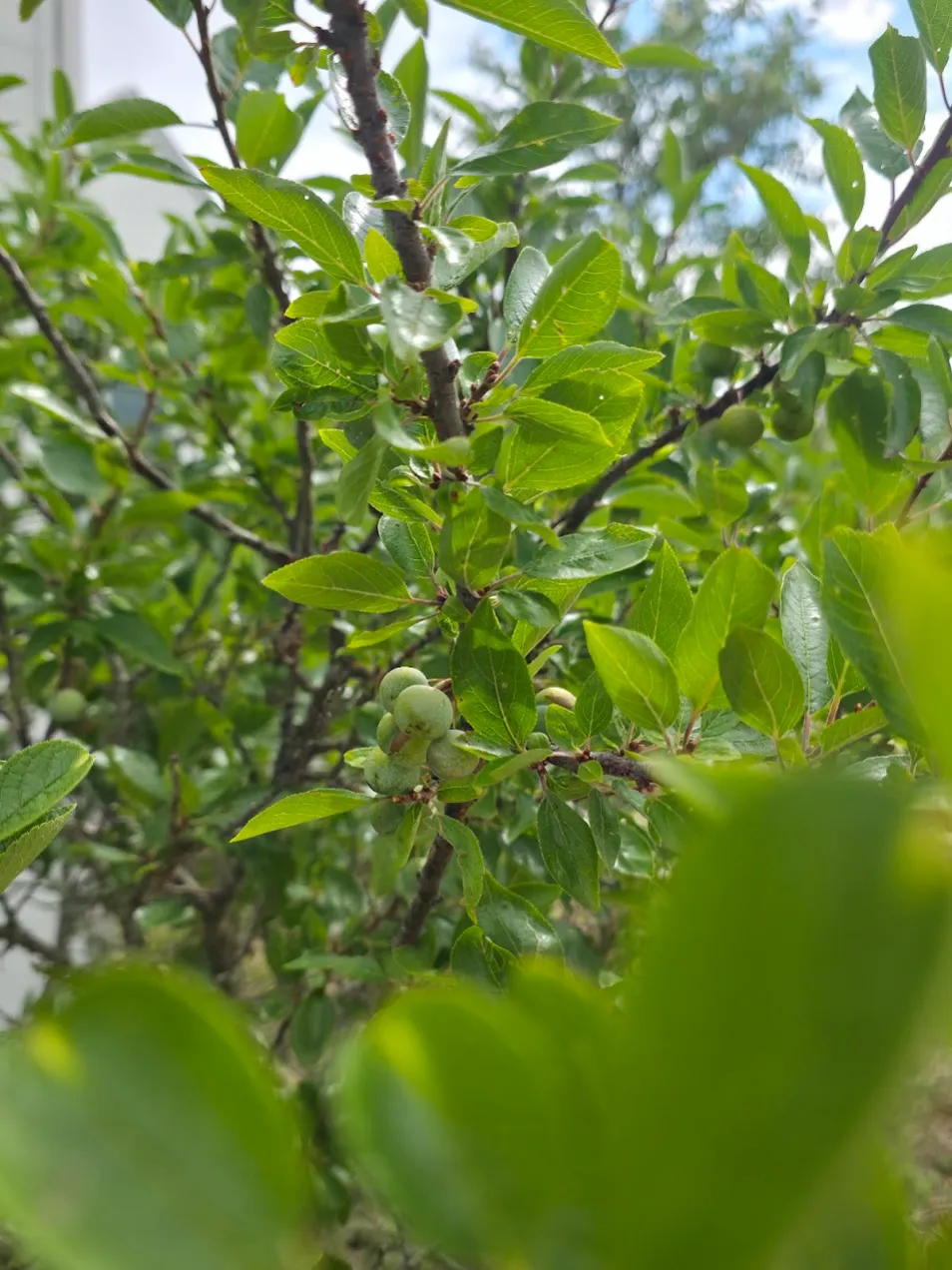
- Beach plum (Prunus maritima)
- Switchgrass (Panicum virgatum)
- Little bluestem (Schizachyrium scoparium)
- Native goldenrods and asters for seasonal color and pollinator support
- Eastern red cedar (Juniperus virginiana) where appropriate
- Pitch pine (Pinus rigida) in suitable dry, sandy communities
This is not a universal planting recipe. In fact, that is precisely the point.
The best revegetation palette is the one derived from the site.
A More Natural Hamptons Landscape
There is also something aesthetically compelling about this approach.
Revegetation doesn’t have to look messy, and ecological planting doesn’t have to feel undesigned. The most successful coastal landscapes can be extraordinarily restrained: pale grasses moving in the wind, broad mats of groundcover, occasional shrubs emerging naturally, and existing trees providing structure overhead.
The design comes from editing, proportion and understanding when to intervene.
For properties within environmentally sensitive areas of East Hampton, revegetation may begin as a permitting or restoration requirement. But approached thoughtfully, it can become much more than that: an opportunity to reconnect a property with the larger landscape around it.
Observe first. Understand the habitat. Then plant.
Because on the East End, the most beautiful landscape is often the one that feels as though it was always meant to be there.
Landelier Landscape Atelier works on residential landscape design, native planting, revegetation and coastal landscape projects throughout East Hampton, Amagansett, Montauk, Sag Harbor, Bridgehampton and the East End of Long Island.