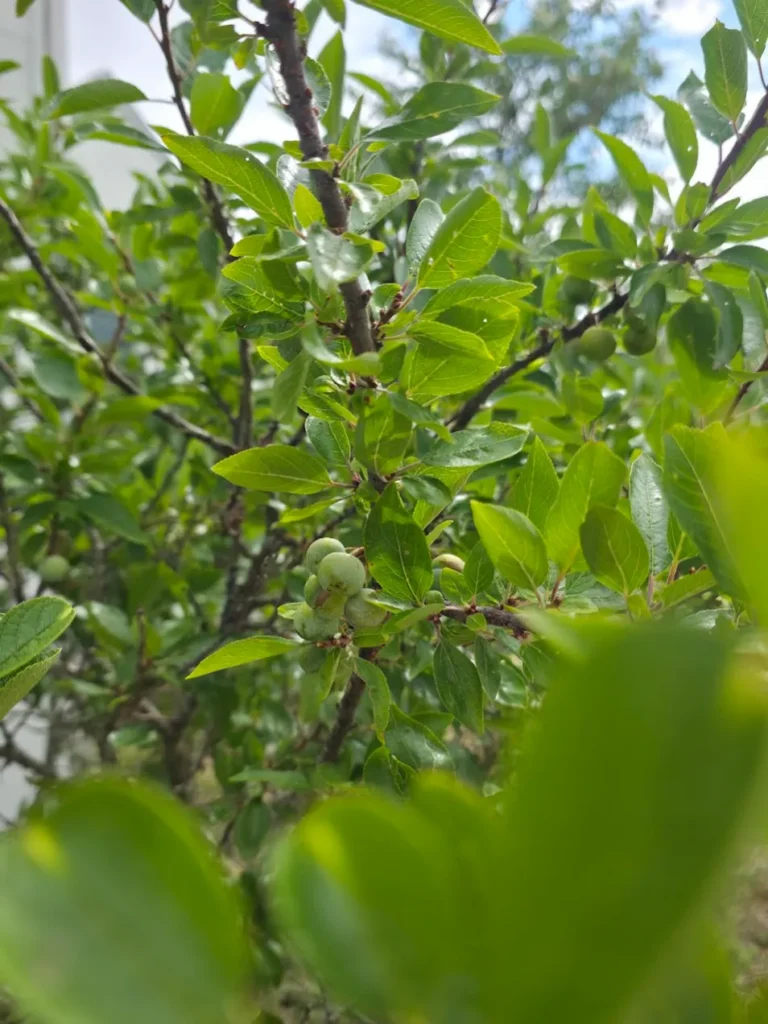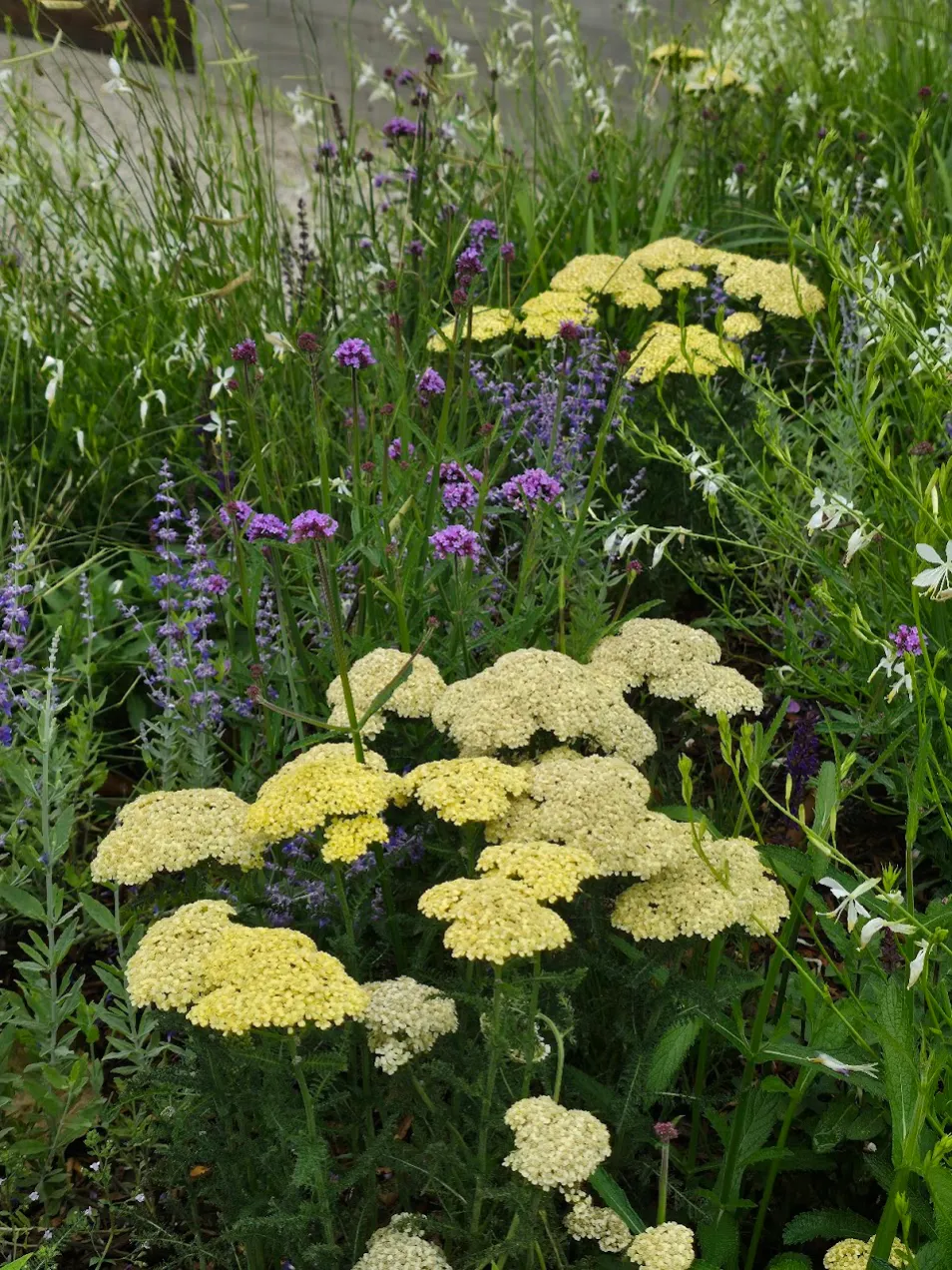
A considered planting palette can be one part of creating a more comfortable outdoor landscape on the East End.
Living and gardening on the East End of Long Island comes with a few realities. Deer are one. Ticks and mosquitoes are another.
From Sag Harbor and Bridgehampton to East Hampton, Amagansett and Southampton, our gardens often sit at the intersection of woodland, meadow, wetland and residential landscape—exactly the kind of conditions where ticks and mosquitoes can thrive.
There is no single plant that will make them disappear. But thoughtful landscape design can make the spaces immediately around the house, pool, terrace and lawn less hospitable to ticks and mosquitoes while remaining beautiful, ecological and distinctly East End.
And some of our favorite plants happen to fit beautifully into that strategy.
Start with the landscape, not the spray
For ticks in particular, the architecture of the garden matters.
Ticks prefer protected, humid environments—woodland edges, leaf litter, taller vegetation and shaded ground. Cornell recommends creating sunny, open areas around the parts of a property that people use most, limiting dense groundcover and leaf accumulation, and establishing clear transitions between woodland and recreational areas. The CDC similarly recommends a roughly three-foot wood-chip or gravel buffer between lawns and wooded areas.
This does not mean stripping a property of vegetation.
Quite the opposite.
It means designing more intentionally: keeping lush woodland where it belongs, creating defined thresholds, opening selected areas to sunlight and air, and locating terraces, lawns and play spaces thoughtfully within the larger landscape.
A gravel path through the garden, a sunny planting ribbon bordering a terrace, or a dry planted transition between lawn and woodland can all become beautiful design elements while serving a practical purpose.
Then add the aromatic plants
Many plants traditionally associated with insect-repellent gardens contain strongly aromatic foliage and essential oils. Their presence should be thought of as one supporting layer rather than a substitute for proven tick or mosquito control.
Conveniently, these plants also happen to be some of the most useful in a relaxed, contemporary Hamptons garden.
English Lavender
Lavandula angustifolia
Few plants work harder aesthetically around a terrace or pool. Lavender loves sun and well-drained soil and brings softness to gravel, stone and paving without feeling overly ornamental.
The fragrance is an added bonus—and the foliage is generally unappealing to deer.
We like it in loose drifts rather than formal rows, particularly against warm gray stone or pale gravel.
Catmint
Nepeta × faassenii ‘Walker’s Low’
One of those nearly indispensable plants.
‘Walker’s Low’ produces clouds of lavender-blue flowers, flowers for a long period, tolerates heat and dry conditions once established, and is generally left alone by deer.
It is particularly good along walks, pool gardens and the sunny front edges of perennial planting.
Mountain Mint
Pycnanthemum muticum + Pycnanthemum virginianum
For a more natural East End landscape, mountain mint is one of our favorites.
It is native, highly aromatic and exceptionally attractive to pollinators. Its silver-green foliage feels equally at home in a designed perennial garden or transitioning into meadow.
Used generously, it creates the kind of effortless planting that feels wild without looking accidental.
Creeping Thyme
Thymus serpyllum / Thymus praecox
A beautiful option for the smallest spaces: between stepping stones, along gravel paths, spilling over stone or at the sunny edge of a terrace.
Because thyme prefers dry, sunny conditions, it also fits naturally into the type of landscape environment we want immediately adjacent to frequently used outdoor spaces.
Culinary Thyme
Thymus vulgaris
There is no reason the practical plants cannot be edible.
Herb thyme works beautifully in kitchen gardens, raised beds, around outdoor cooking spaces or incorporated informally among ornamentals.
We love landscapes where herbs do not have to live in a separate “herb garden.”
Garden Sage
Salvia officinalis
Soft gray foliage, wonderful texture and a distinctive fragrance make common sage surprisingly sophisticated when used outside the vegetable garden.
Pair it with lavender, grasses or nepeta for a restrained silver-green palette.
‘Caradonna’ Salvia
Salvia nemorosa ‘Caradonna’
Dark stems and vertical violet flowers give ‘Caradonna’ a cleaner, more architectural quality than many flowering perennials.
It is excellent threaded through grasses, catmint or lavender where a little vertical punctuation is needed—and it is another plant that deer generally find less appealing.
One shrub we particularly like: American beautyberry
Callicarpa americana
American beautyberry brings another layer to the palette.
Its loose natural form works beautifully at meadow and woodland transitions, and the extraordinary clusters of violet berries later in the season give it a moment that feels almost unreal.
For East End gardens where we are trying to balance ecological value with a refined planting composition, it is worth considering.
Mosquitoes require a different strategy
When it comes to mosquitoes, planting is secondary to water management.
Mosquito larvae develop in water, and surprisingly tiny amounts can be enough. Cornell notes that container-breeding mosquitoes can reproduce in things as small as unused pots, gutters and other objects that collect water. The CDC recommends checking the property weekly and emptying or cleaning containers, birdbaths, planters, toys, pool covers and other places where water sits.
In landscape design, that translates into details we think about from the beginning:
proper site drainage,
free-draining planting beds,
gutters and downspouts that actually drain,
irrigation that does not constantly saturate planting,
water features designed with circulation rather than stagnant water,
and avoiding forgotten pockets where rainwater continually collects.
Sometimes the best mosquito-control detail in a landscape is simply good grading.
And then there are the deer
On the East End, deer and ticks are closely intertwined as a landscape-management issue. While deer are not the only animals involved in tick ecology, limiting deer movement through heavily occupied portions of a residential property can be another useful layer of a broader tick-management strategy.
This is where many of these aromatic plants become especially valuable.
Lavender, thyme, sage, nepeta and mountain mint are generally considerably less tempting to deer than plants such as hosta, tulips or many hydrangeas.
Nothing is truly deer-proof when pressure is high—but designing predominantly with plants deer tend to avoid can dramatically change how a garden performs.
Our ideal East End approach
We prefer to think about tick and mosquito management as part of the overall choreography of the landscape, rather than as something applied to it afterward.
Close to the house: open, sunny, beautifully planted spaces with good airflow.
Around terraces and pools: aromatic perennials, herbs, gravel and well-drained planting.
At lawn edges: a clearly designed transition instead of lawn disappearing directly into dense woodland.
Further out: native meadow, woodland and habitat planting can become richer and looser.
And throughout the property: thoughtful drainage, reduced standing water and planting selected with deer pressure in mind.
The result does not need to look defensive.
It can simply look like a very good garden.
Landelier Landscape Atelier designs residential landscapes throughout Sag Harbor, East Hampton, Southampton, Bridgehampton, Amagansett and the East End of Long Island, with an emphasis on thoughtful planting, ecological sensitivity and gardens that feel intimately connected to their setting.